Two faults account for a large share of everyday furniture repair: joints that have worked loose and veneer that has lifted. Neither is difficult to address in principle, but both reward patience, because the most common mistake, flooding a loose joint with modern glue without cleaning it first, makes the next repair far harder.
Loose chair and table joints
A chair that rocks usually has dried-out glue in its mortise-and-tenon or dowel joints. The durable repair is to take the joint apart, remove the old glue and re-glue it, rather than to force fresh adhesive into a dirty joint.
- Ease the joint apart gently, supporting both members so nothing splits.
- Scrape and sand old glue from both surfaces back to clean wood.
- Re-glue and clamp square, checking diagonals before the glue sets.
Why hide glue is often chosen. Animal hide glue is reversible with heat and moisture, so a future repair can take the joint apart again. That reversibility is the main reason it remains common in the restoration of older furniture, even though modern adhesives are stronger.
Lifted and bubbled veneer
Veneer lifts when the glue beneath it fails, often along an edge or over a blister in the centre of a panel. Small areas can frequently be re-laid without removing the veneer at all.
Edge lifting
Work fresh glue under the loose edge with a thin blade, press the veneer down and clamp it over a protective block until set. Excess glue is wiped away while still wet.
Centre blisters
A blister with no access point is slit along the grain with a sharp knife so glue can be introduced underneath, then pressed flat. Cutting along the grain keeps the repair almost invisible once the surface is cleaned.
Small losses and chips
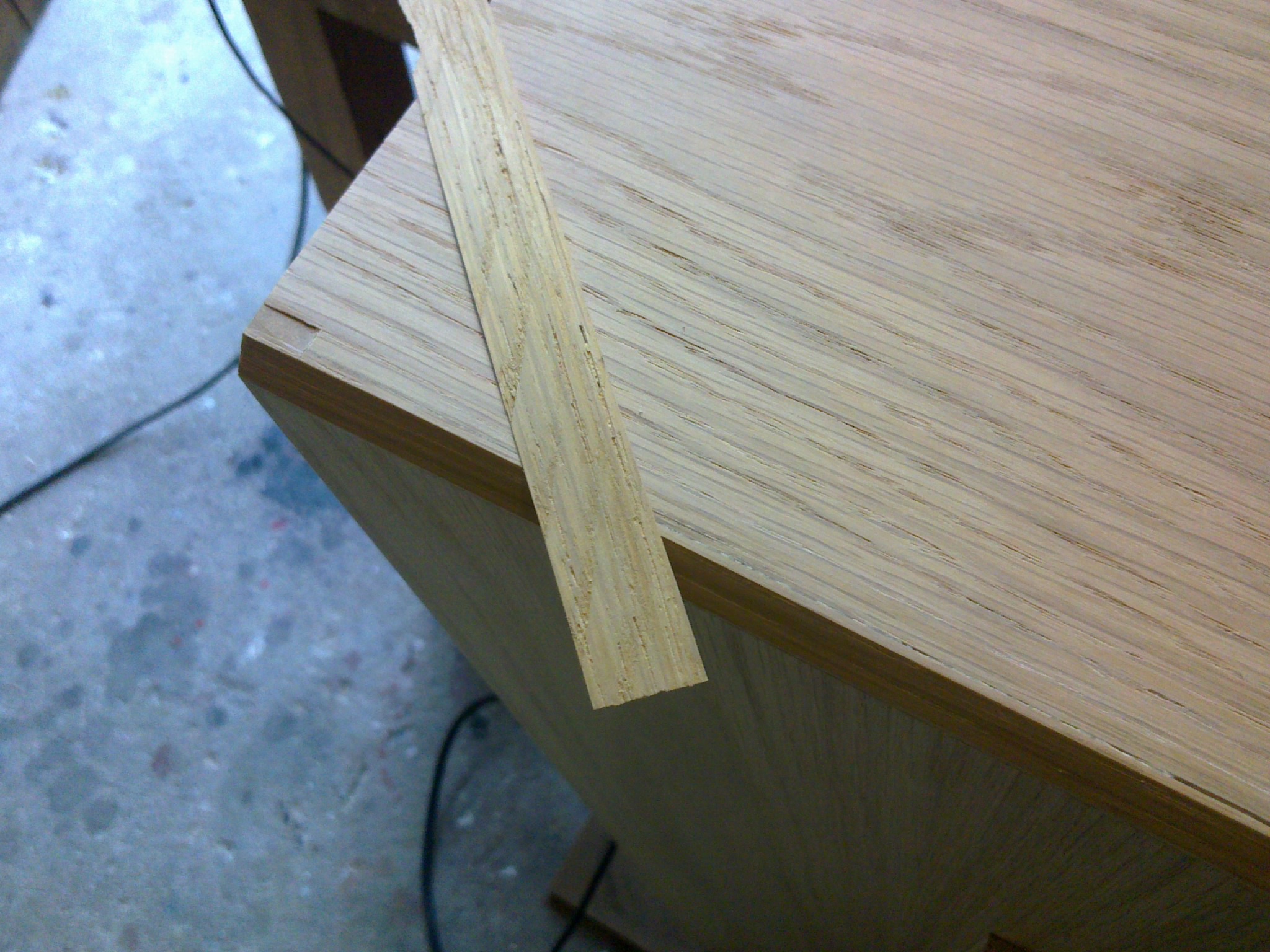
Where a fragment of veneer or solid edge is missing, a patch cut from matching material and shaped to the loss is more stable and more sympathetic than filler. Aligning the grain direction of the patch with the surrounding wood is what makes it disappear.
Knowing when to stop
Basic repair keeps a sound piece in daily use. Structural damage to a chair frame, woodworm activity or large areas of failed veneer move a piece beyond simple fixes, and recognising that boundary is part of repairing furniture well.